22 Years in Education. Here's What Nobody Tells You About Workforce Readiness.
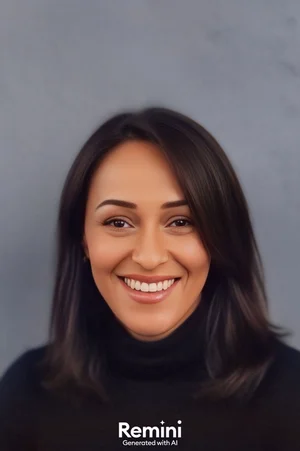
After two decades in K-12 education and now hiring employees as a COO, Dr. Jennifer Baez shares what schools and organizations consistently miss about workforce readiness — and what it actually takes to fix it.
I spent 22 years in K-12 education. Classroom teacher. School principal. District leader. I believed — genuinely believed — that we were preparing students for the world.
Then I became a COO. And I started hiring people.
What I found on the other side of that desk was not what I expected. Smart people. Credentialed people. People who had done everything right on paper. And still — something was missing.
It took me a while to name it. But once I did, I could not stop seeing it everywhere.
This is what nobody tells you about workforce readiness.
What Education Gets Right
Let me be fair before I'm honest.
Schools do a lot of things well. They teach content. They build academic skills. They develop critical thinkers — at least in theory. The educators I worked alongside for 22 years were some of the most dedicated, hardest-working professionals I have ever known.
But the system those educators operate inside was not designed to produce workforce-ready people. It was designed to produce academically competent graduates. And those two things are not the same.
The U.S. Chamber of Commerce and College Board's 2025 New Hire Readiness Report confirms it: employers and educators are not aligned on what readiness actually looks like. Educators emphasize broad soft skills. Employers want specific, observable, job-ready behaviors. Those two groups are having completely different conversations — and students are caught in the middle.
What Nobody Tells You: The Invisible Curriculum
Here is the thing schools rarely teach explicitly — and most educators don't even realize they're skipping it.
There is an invisible curriculum that every successful professional has mastered. It has nothing to do with GPA. It has nothing to do with test scores. It is the set of behaviors, habits, and professional instincts that determine whether someone can actually function in a workplace.
Things like:
How to receive feedback without shutting down or getting defensive. Schools grade students. Workplaces evaluate adults. Those are completely different psychological experiences — and no one prepares students for the difference.
How to manage up. Knowing how to communicate with someone who has authority over you, ask for what you need, and advocate for yourself professionally — this is not taught in a single classroom I ever walked into.
How to navigate ambiguity. In school, every problem has a right answer. At work, most problems don't. The ability to move forward without complete information is one of the most critical workplace skills there is, and it is almost entirely absent from formal education.
How to show up consistently, not just when it's easy. School has built-in accountability — attendance policies, grades, parents, counselors. The workplace doesn't. Intrinsic professional discipline has to be developed somewhere. For most people, it isn't.
According to NACE, 86.9% of employers rate professionalism and work ethic as a top hiring priority — yet only 44.2% believe new graduates actually demonstrate it. That gap between what employers value and what graduates deliver is not small. It is a chasm.
What I Saw from the Principal's Office
I want to be specific here, because I think the abstraction is part of the problem.
As a principal, I watched students who were brilliant in the classroom fall apart the moment they entered a work experience or internship. Not because they weren't capable. Because they had never been in an environment where their behavior — not their grade — was what mattered.
They didn't know how to ask a question without it sounding like a complaint. They didn't know how to handle being told "no" or "not yet." They didn't know that arriving five minutes early is different from arriving on time, or that sending a professional email is a skill that has to be learned, not assumed.
These are not character flaws. They are preparation gaps.
And the heartbreaking part is that many of those students had every other marker of success. They were smart. They were motivated. They were the ones teachers called their best students.
But smart and motivated does not equal ready.
What I See Now from the Other Side of the Desk
When I transitioned to the COO role at BEHKO Construction, I thought the education-to-workforce gap was something I understood. I had studied it. I had talked about it. I had built programming around it.
I had no idea.
Hiring is different when it is your organization on the line. When the wrong hire costs you time, money, team culture, and your own credibility as a leader — you start paying attention to different things.
What I look for now has almost nothing to do with credentials. I look for how someone handles uncertainty in the interview. I look for whether they ask questions or just wait to be told what to do. I look for whether they can take a piece of feedback I give them mid-conversation and immediately adjust.
Those are not things you can fake. And they are not things most schools teach.
A 2025 study from Bodyswaps found that 63% of employers identify skill gaps as their number one barrier to business transformation — and 33% of 2025 graduates were unemployed and actively seeking work despite the demand for talent. That is not a supply problem. That is a preparation problem.
The Part That Is Hard to Say
I spent 22 years inside the system that is producing this gap.
And I did not see it clearly until I left.
That is not a comfortable thing to admit. But I think it is one of the most important things I can say.
The educators I worked with were not failing their students on purpose. They were operating inside a system that measured the wrong things — test scores, graduation rates, GPA — and called it readiness. The invisible curriculum never made it onto the report card because it was never on the standards document.
And so generation after generation of students graduated knowing how to pass a test and having no idea how to navigate a performance review.
The America Succeeds Durable Skills research puts it plainly: typical school structures, with their focus on content coverage and standardized testing, fail to develop the very skills that determine long-term professional success. Every student has the potential. The system just isn't built to reach it.
What Actually Fixes It
The answer is not to tear down the education system. The answer is to name what it was never designed to do — and build systems around it.
For schools, that means treating professional behavior as a curriculum, not an afterthought. It means building in real work experiences, not just career days. It means naming the invisible curriculum explicitly and teaching it with the same rigor as algebra.
For organizations, that means stopping the assumption that a diploma equals readiness. It means defining what "professional" actually looks like inside your specific environment. It means building onboarding that doesn't just cover process — it covers behavior.
And for leaders who sit at both tables — like I do — it means being honest about what we saw, what we missed, and what we now know.
That is the only way the gap closes.
Watch: What Nobody Tells You About Workforce Readiness
I recorded this video to go deeper on everything I covered here. If you lead a school, a district, or an organization and you've been sensing this gap without being able to name it — this is for you.
Ready to Find Your Gaps?
The free Classroom to Career Gap Checklist is a five-minute assessment that helps leaders identify exactly where workforce readiness gaps are showing up in their organization or school — so you know where to start.
If you're ready to go beyond the checklist, the Workforce Readiness Blueprint is the full framework for building a workforce-ready culture from the inside out.
The gap is real. And now you know where it came from.
Dr. Jennifer Baez is a former K-12 teacher, school principal, and district leader with 22 years in education. She currently serves as COO at a construction company and helps schools and organizations close the workforce readiness gap through the Just Beyond the Classroom framework. Connect with Dr. Baez here.